
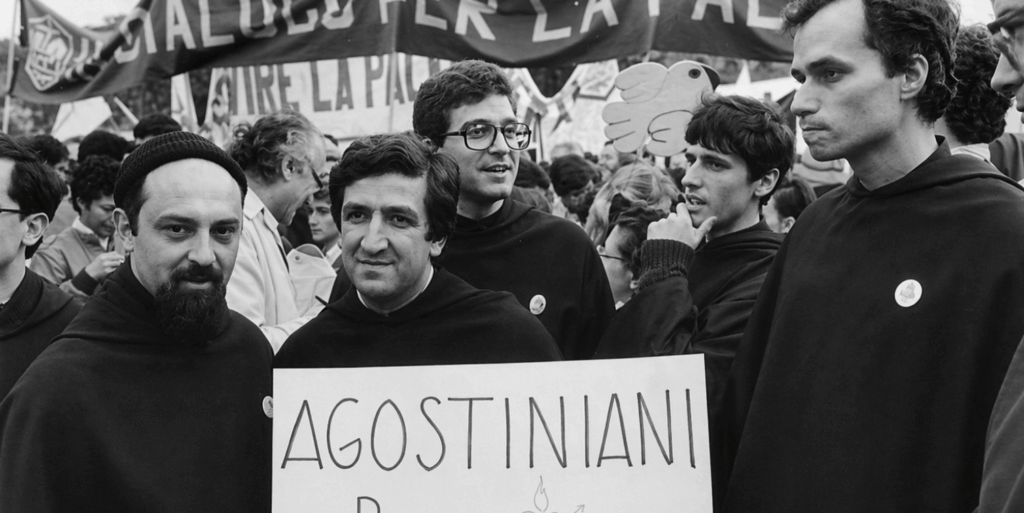
il diacono Prevost manifesta con Pax Christi, pascolo del KGB, contro i missili a Comiso
La credibilità e l’autorevolezza non s’ereditano, si conquistano. Nemmeno un Pontefice può sottrarsi a questa regola elementare. Ogni lezione del Vaticano agli Stati sovrani sull’immigrazione, sulla morale pubblica o sulle scelte politiche, pretendendo di parlare dall’alto di un’autorità etica, trascura che tale autorità è declinante, infine smarrita dal 1944, dai silenzi di Pio XII, omertoso con Alcide De Gasperi, Giorgio Almirante e altri sulle decine di migliaia di massacrati, amputati, violentati, arsi vivi dai partigiani comunisti di Palmiro Togliatti, dai comunisti titini e dalle truppe francesi, decine di migliaia a guerra finita, fra i quali centinaia di religiosi e religiose, nonché seminaristi dei quali si va smarrendo la memoria. Silenzio tombale, anche di Aldo Moro quando s’accingeva a proporre l’ingresso del Partito Comunista al governo.
L’autorità morale non coincide con l’autorità religiosa. La prima si misura con i fatti; la seconda appartiene alla fede.
È su questo terreno che la Chiesa contemporanea appare sempre più fragile per colpa di pontefici che da Pio XII in poi hanno aggravato il comportamento del Vaticano, sempre più succube degli interessi terreni e delle politiche dei più forti ovvero di quelli che sembrano imminenti vincitori. Da ultimo fu così col PCI e il Muro di Berlino cadde sui calici colmi di vino sconsacrato. Oggi sono temerari con l’Islam a dispetto dei milioni massacrati dalla Spada di Maometto. Oggi scomunicano quanti sono responsabili di celebrare con l’antico rito e lasciano indisturbati pervertiti, orgiastici, servi di Sorod e dell’ANPI.
Se l’accoglienza dei migranti fosse davvero un dovere assoluto, perché il Vaticano lascerebbe ricadere il peso sulle comunità civili, sui contribuenti, sugli enti locali e sugli Stati? Perché il Vaticano non rende pubblica, con la stessa enfasi con cui richiama i governi, la consistenza del proprio patrimonio immobiliare concretamente destinato all’ospitalità permanente? Quanti conventi, seminari, palazzi, case religiose e proprietà ecclesiastiche sono stati trasformati in centri di integrazione? Quante risorse dell’otto per mille vengono impiegate stabilmente per questo scopo? Sono domande semplici. Meritano risposte altrettanto semplici.
Predicare la carità con il patrimonio degli altri è un esercizio retorico, non una testimonianza evangelica. Disse Gesù (Lu.11,46): «Guai anche a voi, dottori della Legge, che caricate gli uomini di pesi insopportabili, e quei pesi voi non li toccate nemmeno con un dito!» Prevoglio è certamente nel Vangelo, non c’è dubbio. Il Vaticano, Prevost, Zuppi, Parolin, i vescovi , sì, siete tutti in questo Vangelo.
Sorprende poi che si dimentichi la lezione della storia americana. Gli Stati Uniti nacquero anche dalla diffidenza verso le ingerenze delle autorità religiose nel governo civile. I Founding Fathers appartenevano a sensibilità diverse, ma condivisero un principio destinato a segnare la modernità: nessuna Chiesa avrebbe governato lo Stato e nessuno Stato avrebbe imposto una Chiesa. Da qui nacque il Primo Emendamento, una delle più alte affermazioni della libertà religiosa. Chi oggi giudica quella tradizione dovrebbe anzitutto comprenderla. Ma il problema del Vaticano non riguarda soltanto l’attualità. Riguarda la memoria.
L’istituzione che chiede trasparenza ai governi dovrebbe offrire la stessa trasparenza su se stessa. Gli archivi ancora non completamente accessibili, le grandi crisi della Guerra fredda, l’Ostpolitik, i rapporti con il comunismo italiano, gli scandali finanziari, le vicende che hanno coinvolto lo IOR, il caso di Emanuela Orlandi, gli abusi sessuali commessi da membri del clero, le lotte di potere interne alla Curia: tutto questo costituisce un patrimonio di interrogativi che non può essere liquidato come ostilità anticlericale. La verità non teme gli archivi. E, non dimentichiamolo, la complicità operativa con le Brigate Rosse e con gli agenti del GRU operanti a via Fani.
Nemmeno il delitto Moro può essere espunto da questa riflessione. A quasi mezzo secolo di distanza permangono questioni storiche irrisolte sulle relazioni tra istituzioni, servizi, politica e soggetti internazionali. Gli storici continuano a discuterne. Chiedere che ogni istituzione renda disponibili i documenti utili alla ricostruzione dei fatti non significa accusare: significa pretendere che la storia sia finalmente scritta sulla base delle prove e non delle convenienze. La Chiesa dovrebbe essere la prima alleata della verità, non della ragion di Stato. Il punto decisivo, tuttavia, è un altro.
Il cristianesimo non nacque per distribuire giudizi ai governi. Nacque per convertire anzitutto se stesso attraverso l’esempio. Cristo non impose mai ad altri sacrifici che non fosse disposto a portare personalmente. È questa distanza tra il Vangelo e una parte della sua rappresentazione istituzionale che alimenta oggi la sfiducia di molti credenti. Il pulpito è diventato una tribuna politica, il Vangelo non diventerà un programma ideologico, nonostante voi. Vergognatevi e confessate i vostri delitti, prima di predicare.
Indicazioni bibliografiche essenziali
- Vito Sibilio, studi sulla Guerra fredda, il comunismo e il mondo cattolico.
- Christopher Andrew – Vasili Mitrokhin, The Mitrokhin Archive (voll. I-II).
- Christopher Andrew, The Sword and the Shield.
- John O. Koehler, Stasi.
- Ion Mihai Pacepa e Ronald Rychlak, Disinformation.
- Paul Kengor, A Pope and a President.
- Adrian Hänni, studi sulle misure attive sovietiche.
- Documentazione degli archivi della Stasi (BStU/Bundesarchiv) e degli archivi dei servizi dell’Europa centro-orientale.
Credibility and authority are not inherited; they are earned. Not even a Pope can escape this basic rule. Every lesson the Vatican imposes on sovereign states regarding immigration, public morality, or political choices—claiming to speak from the heights of ethical authority—ignores the fact that such authority has been in decline, and has ultimately been lost since 1944, due to the silences of Pius XII, who maintained a code of silence with Alcide De Gasperi, Giorgio Almirante, and others regarding the tens of thousands who were massacred, maimed, raped, or burned alive by Palmiro Togliatti’s communist partisans, by Tito’s communists, and by French troops—tens of thousands after the war had ended, including hundreds of men and women of religious life, as well as seminarians whose memory is gradually fading. A deathly silence—even from Aldo Moro as he prepared to propose the Communist Party’s entry into the government.
Moral authority is not the same as religious authority. The former is measured by facts; the latter belongs to faith.
It is on this ground that the contemporary Church appears increasingly fragile due to popes who, from Pius XII onward, have exacerbated the Vatican’s conduct, making it increasingly subservient to earthly interests and the policies of the most powerful—that is, those who appear to be the imminent victors. Most recently, this was the case with the Italian Communist Party (PCI), and the Berlin Wall fell amid chalices brimming with desecrated wine. Today, they are reckless in their dealings with Islam, despite the millions massacred by the Sword of Muhammad. Today, they excommunicate those responsible for celebrating the ancient rite while leaving perverts, orgiasts, and servants of Sorod and the ANPI undisturbed.
If welcoming migrants were truly an absolute duty, why would the Vatican shift the burden onto civil communities, taxpayers, local authorities, and nations? Why doesn’t the Vatican publicly disclose—with the same emphasis with which it calls on governments—the extent of its real estate holdings actually designated for permanent housing? How many convents, seminaries, palaces, religious houses, and ecclesiastical properties have been converted into integration centers? How much of the “eight per thousand” tax revenue is consistently allocated for this purpose? These are simple questions. They deserve equally simple answers.
Preaching charity with other people’s assets is a rhetorical exercise, not a Gospel witness. Jesus said (Luke 11:46): “Woe also to you, teachers of the Law, who load people down with burdens they cannot carry, and you yourselves do not even touch those burdens with a finger!” Prevoglio is certainly in the Gospel; there is no doubt about it. The Vatican, Prevost, Zuppi, Parolin, the bishops—yes, you are all in this Gospel.
It is also surprising that the lesson of American history is forgotten. The United States was also born out of distrust of religious authorities’ interference in civil government. The Founding Fathers held diverse views, but they shared a principle destined to shape modernity: no church would govern the state, and no state would impose a church. From this arose the First Amendment, one of the highest affirmations of religious freedom. Those who judge that tradition today should first and foremost understand it. But the Vatican’s problem is not limited to current events. It concerns memory.
The institution that demands transparency from governments should offer the same transparency regarding itself. The archives that are still not fully accessible, the major crises of the Cold War, the Ostpolitik, relations with Italian communism, financial scandals, the affairs involving the IOR, the case of Emanuela Orlandi, sexual abuse committed by members of the clergy, and the power struggles within the Curia: all of this constitutes a wealth of questions that cannot be dismissed as anticlerical hostility. The truth has nothing to fear from the archives. And, let us not forget, the operational complicity with the Red Brigades and with GRU agents operating on Via Fani.
Not even the Moro murder can be excluded from this reflection. Nearly half a century later, unresolved historical questions remain regarding the relationships between institutions, intelligence agencies, politics, and international actors. Historians continue to debate these issues. Demanding that every institution make available the documents necessary to reconstruct the facts does not mean making accusations: it means insisting that history be finally written on the basis of evidence, not political expediency. The Church should be the foremost ally of the truth, not of reasons of state. The decisive point, however, is another.
Christianity was not created to pass judgment on governments. It was created first and foremost to transform itself through example. Christ never imposed sacrifices on others that he was not willing to bear personally. It is this gap between the Gospel and part of its institutional representation that fuels the distrust of many believers today. The pulpit has become a political platform, but the Gospel will not become an ideological program, despite your efforts. Be ashamed and confess your sins before you preach.
Essential Bibliography
- Vito Sibilio, studies on the Cold War, communism, and the Catholic world.
- Paul Kengor, A Pope and a President.
- Adrian Hänni, studies on Soviet active measures.
- Documents from the Stasi archives (BStU/Bundesarchiv) and the archives of the intelligence services of Central and Eastern Europe.
Christopher Andrew – Vasili Mitrokhin, The Mitrokhin Archive (vols. I–II).Christopher Andrew, The Sword and the Shield.John O. Koehler, Stasi.Ion Mihai Pacepa and Ronald Rychlak, Disinformation.
