
 The first chair was surely a rock / La prima sedia fu certamente una roccia (riflessione semiseria sulle origini del “potere della sedia“/a semi-serious thinking about the origins of the “power of the chair“)
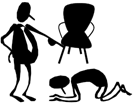
The first chair was surely a rock, likely smoothed on the top by waters of a river. In fact, our most ancient fathers, after they had been reached the upright position, discovered how comfortable staying sat on a bare rock was. As long as they were satisfied by their rocks, there wasn’t any problem. However, as soon as somebody planned to transfer that natural facility into home, then the first contrapositions and difficulties appeared. In that moment civilization was being born. Nevertheless those most ancient fathers might not have very well reckoned on the consequences deriving from such found object, which, as we’ll soon see, they were discovering. So the expression “Founding Fathers” seems to run just on that first event and then readapted from time to time. Anyway, let’s go gradually ahead. So, coming back to the first time, when the big stone was transferred into the house, it would seem a realistic supposition that someone objected to the rules of priority for sitting on the stone. After all, we have to consider that, until that event, they got used to sitting on the bare ground, so they were, until then, at the same level. When the heavy stone was carried into his home, the wise “pater familias” was about just to say:«It’s mine…» But as his wife looked daggers, he gulped immediately down the incautious words and realized the strong and pressing opportunity to look for another stone – probably heavy as well – for carrying into home. Later in the night, while he was coming back, breathless and tired, with a shining and white stone on his paining shoulders, he understood how far was the solution of his very heavy problem. In fact, the mother in law was waiting for him, getting impatient on the threshold. Since he had five demanding daughters, he got even more worried and doubtful about the wisdom of having got the first stone and the second one. However, by that time, the mess was well done and he needed a solution, a quick and effective solution. This surely meant an uncontrollable storm during the coming day. So, after he had been offering the heavy stone to the mother in law, who gave the light impression of having lovingly appreciated, he spent the night looking for bringing down his increasing fear. Just before the dawn was breaking, the idea flashed within his mind. “That’s terrific!” he yelled and quickly got out, carrying the necessary tools, going towards the wood about the village. He came back at noon, bringing a funny object. All people of the village surrounded him and everyone was asking:«What’s this?” The Founding Father assumed a solemn posture, then he announced:« Everybody has to know: this is the chair!” The people seemed rather puzzled over it and they asked again:«Chair? What ‘s this funny gadget for?” The Founding Father didn’t feel discouraged and stood up maintaining the same solemn position to explain:«It matches according to the purpose to stay comfortably sitting”. In addition, following this he demonstrated how to do. “Ooh!!!…Wonderful!” The people were amazed, touching and observing, getting around him, while he stayed sitting. At the same time, more then one woman were saying to the husbands:« Learn! That’s the way to do right! Not yours…” and the husbands nodded. Then the Founding Father declaimed:« These are the legs, this is the back, and those are the arms. This is the bottom…” knocking on it “…all together they are the c – h – a – i – r…! Chair!» All people clapped enthusiastically. “Within this night all my family will be equipped as required!. ”All people clapped again and stronger .“Then, you’re the chair-man!?!” more than one cried out. “Correct! It’s me! I like… I… appreciate this… appointment! I keep to such a charge… Yeees… I am the Chairman!!!” At that moment the power of the chair was born, with its rules, its rites, its ceremonies. However, naturally that Founding Father could not have had the awareness of it. By the way, our Founding Father kept his promise to equip all his family. Unfortunately his own chair turned out larger and higher than others. Albeit, neither his wife nor the mother in law objected to anything. After all, he was the Chairman. By that moment everyone who was appointed to any office, immediately started looking around for his appropriated chair.“Where is my chair?” This is the first question also nowadays, when a new Chairman is appointed. Well, while he is asking, the other chair-persons cling their armchairs, looking up (may be praying for the destiny of the new and lovely chairman) however hoping and wanting to stay lasting stuck on the bottom, in order to assure the sharing of the welfare and other similar or higher moral purposes. Of course… Many millennia of experience make us certain that all men are devoted to the chair and every man loves to be sacrificed as Chairman of some board. Consequently everybody has a Chairman above while he acts as Chairman to the people below. In short, all men love the chair, often more than their wives. That’s may be because the chairs have four legs and the wives usually only two. However, could that Founding Father be able to foresee that his appalling night had inserted such a deep effect into the human relationships? A chair, after all… | La prima sedia fu certo una pietra, forse levigata dalle acque d’un fiume. I nostri più antichi padri infatti, dopo aver assunto la posizione eretta, scoprirono quanto fosse comodo poter stare seduti sulla nuda roccia. Finché si accontentarono delle rocce non vi fu alcun problema. Le prime difficoltà e i contrasti giunsero non appena qualcuno volle trasferire nella propria abitazione una tale risorsa. In quel momento stava nascendo la civiltà. Gli antichi padri tuttavia non erano consapevoli delle conseguenze che stavano per palesarsi mentre scoprivano quel fondamentale oggetto. L’espressione “Padri Fondatori” sembra quindi nascere proprio in quel momento per poi riadattarsi di volta in volta. Andiamo comunque avanti per gradi. Ritorniamo al primo istante, quando, trasferita la grande pietra nella casa, è realistico presumere che taluni obiettarono sulle regole di priorità per sedervisi. Dopo tutto, dobbiamo tener conto che fino a quel momento, usando sedere sulla nuda terra, gli umani erano tutti allo stesso livello . Introdotta in casa la pesante pietra, il saggio pater familias fu sul punto di dire: «È mia…» Ma non appena sua moglie lo fulminò, inghiottì le parole e fu consapevole della forte e gravosa opportunità di cercare un’altra pietra – presumibilmente altrettanto pesante – da portare a casa. Più tardi, nella notte, mentre tornava stanco e ansimante, una bianca e lucida pietra sulle spalle doloranti, comprese quanto gravosa fosse la soluzione del suo problema. La suocera infatti lo aspettava sulla soglia con crescente impazienza. Dal momento che aveva cinque figlie esigenti, fu molto preoccupato e dubitò di essere stato accorto recando la prima pietra e poi la seconda. Comunque il guaio era fatto ed egli necessitava d’una soluzione rapida ed efficace. Era in arrivo una tempesta incontrollabile il giorno successivo. Così, offerta la pesante pietra alla suocera, che dette un lieve cenno di amorevole apprezzamento, passò la notte a cercare la soluzione per mettere fine ai suoi crescenti timori. Un momento prima dell’alba l’idea balenò. «Fantastico!» urlò e uscì rapidamente, caricandosi gli utensili necessari, diretto al bosco del villaggio. Tornò verso mezzogiorno, recando un oggetto curioso. Tutti gli abitanti del villaggio lo circondarono chiedendogli: «Che cos’è questo?» Il Padre Fondatore assunse una postura solenne, quindi annunciò: «Ciascuno deve sapere: questa è la sedia!» La gente sembrò alquanto perplessa domandandosi: «Sedia? Che cos’è questo coso così buffo?» Il Padre Fondatore non si perse d’animo e ritto, mantenendo la medesima solenne postura, spiegò: «Essa consente di sedersi comodamente». Ciò detto, mostrò come fare. «Oooh!… Meraviglioso!» Il popolo era stupito, toccando e osservando, standogli sempre intorno mentre egli rimase seduto. Allo stesso tempo, più d’una donna diceva al marito: «Impara! Così si fa… Altro che tu…» e quelli annuivano.. Infine il Padre Fondatore proclamò:«Queste sono le gambe, questa è la spalliera e questi sono i bracci. Questo è il fondo…» e batteva sul legno «…tutto insieme sono la se-di-a…! Sedia!» Tutti applaudirono entusiasti. «Entro stanotte tutta la mia famiglia ne sarà dotata, com’è giusto». Tutti applaudirono nuovamente e più intensamente. «Dunque tu sei l’uomo-sedia!?!» Gridò più d’uno. «Esatto! Sono io! Mi piace… io… apprezzo questo… incarico! Faccio mio questo onere… sìììììì … Io sono il pre-sediente! Presidente!» In quel momento nacque il potere della sedia, con le sue regole, i suoi riti, le sue cerimonie, sebbene il Padre Fondatore non potesse averne la consapevolezza. Il nostro Padre fondatore peraltro mantenne la promessa di dotarne tutta la famiglia. La sua sedia si rivelò purtroppo più grande e più alta delle rimanenti. Né la moglie né la suocera obiettarono alcunché. Dopo tutto, era il presidente. Da quel momento chiunque sia stato nominato in qualuqnue incarico, immediatamente s’è guardato intorno cercando la sedia appropriata . «Dov’è la mia sedia?» Questa è la prima domanda anche al giorno d’oggi, quando un nuovo presidente si insedia. Ebbene, mentre egli domanda, gli altri si aggrappano alle proprie sedie, guardando in alto (forse per pregare per la buona fortuna del nuovo e amabile presidente) comunque decisi a rimanere incollati alla sedia al fine di garantire agli altri il medesimo benessere e per ulteriori scopi di elevato valore morale, naturalmente… Molti millenni di esperienza ci assicurano che gli uomini amano dedicarsi alla sedia e ciascuno confida di essere sacrificato come presidente di qualche consiglio. Ognuno conseguentemente ha un presidente al di sopra mentre egli agisce come presidente sui sottoposti. In breve, tutti gli uomini amano la sedia, spesso più delle proprie mogli. Forse perché le sedie hanno quattro gambe e le mogli di solito soltanto due. Come avrebbe potuto, il Padre Fondatore, prevedere che la sua terribile notte avrebbe modificato così profondamente i rapporti umani? Una sedia , dopo tutto… |
CONDIVIDILO COI TUOI AMICI MEDIANTE FACEBOOK, GOOGLE+, TWITTER
